Flea
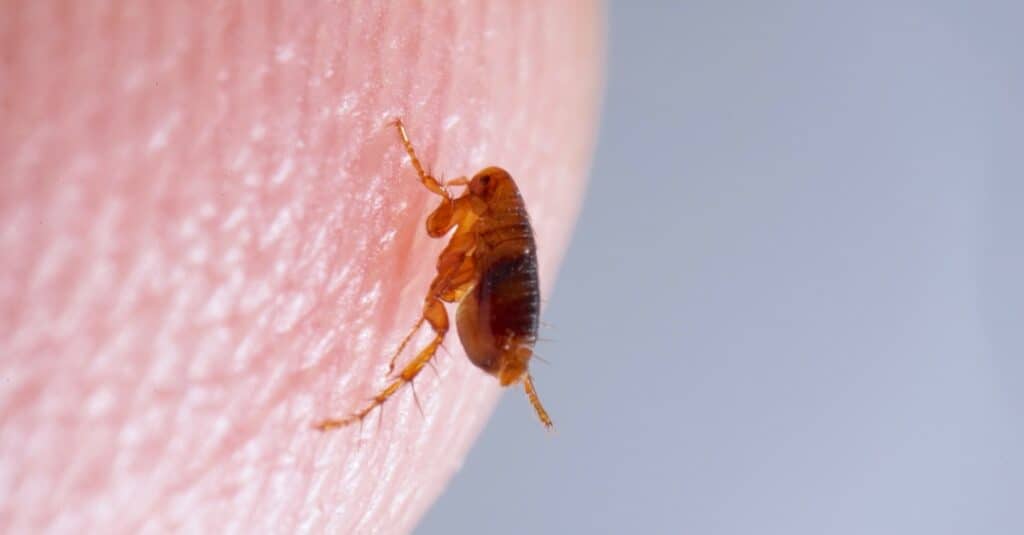
Like lice, fleas are primitive wingless insects that make a living sucking the blood of other animals. They sometimes even parasitize those animals that are distasteful to lice, such as bats. Fleas compensate for their inability to fly with their ability to jump. They can jump as much as 200 times the length of their tiny bodies, the equivalent of a 6-foot-tall human leaping 1200 feet into the air.
A fleabite by itself can cause itching and inflammation, and an infestation can be so severe that the host animal can develop anemia. But it is as a vector of the deadly disease that this tiny insect comes into its own. Fleas transmit all manner of pathogens, including viruses, bacteria, and worms. The diseases these creatures transmit include typhus and famously, the bubonic plague. This plague wiped out 50 million people and destroyed much of the population of Europe in the 14th century. Fleas also transmit tapeworms and Trypanosoma protozoans which can cause sleeping sickness and Chagas disease. Though the plague is no longer common around the world and can be treated with a course of antibiotics, fleas are responsible for a ghastly skin disease called tungiasis. This disease causes inflammation of the skin, itching, and sores.
Wasps, Bees, Ants, And Hornets
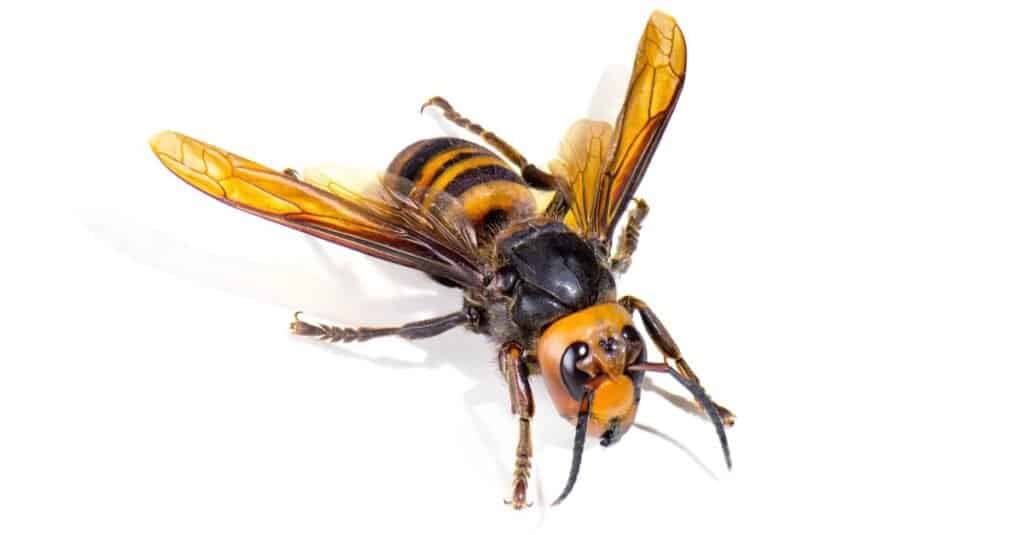
These largely beneficial but still dangerous insects belong to the Hymenoptera order. Hymmenoptrans are probably the most venomous insects on earth. The females sting, and sometimes those stings are harmful beyond causing severe pain. Some people are allergic to the stings of hymenopterans and must receive prompt medical care lest they go into shock.
The Asian giant hornet, nicknamed the murder hornet because of its habit of attacking and killing honeybees, is the largest of the wasps and can be 2 inches in size. It not only has a more powerful venom than most hymenopterans but seems to be able to spray it into people’s eyes as well as deliver it with its stinger. Yet even this wasp isn’t the most venomous. That title goes to a Philippine species called Vespa luctuosa. Its sting is not only excruciating but can lead to convulsions, blood in the urine, and cyanosis.


