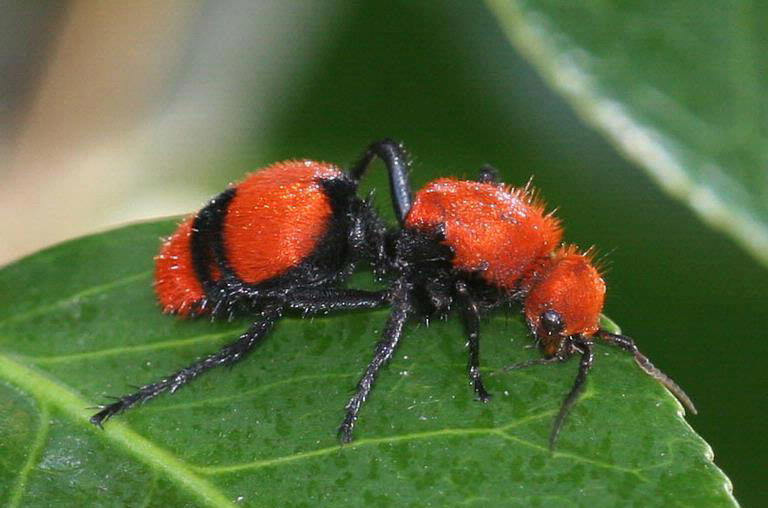
Quit complaining about gnats and mosquitoes. David Rivers, Ph.D., professor of biology at Loyola University Maryland, is here to remind us that no matter how much you may hate getting stung by a bee, your interaction with an insect could always be worse.
When Rivers co-authored a textbook, The Science of Forensic Entomology, published earlier this year, he included a chapter about insects that produce toxins that can kill people under certain circumstances.
Loyola magazine invited Rivers to introduce us to a few of the deadliest insects in the world, and he was happy to comply.
What makes an insect deadly?
“Insects can fall into two categories, one where the individual produces something that is so painful or so lethal that one individual insect is lethal to you. Most of those do not occur in North America, but a few do occur in South America,” Rivers says.
“Then there are those that produce a painful toxin that may indeed be lethal, but it’s when they attack as a group that they truly become deadly. In that regard, we do have some that are close by: There are two, and they are both ant species.”
Meet the insects
These aren’t as far from Loyola’s campus as you might like to think, since you can find them as close as the southern part of Maryland.
“When it’s just a few, it’s not lethal. But if the cow steps on any, a chemical signal in the venom gland, an alarm pheromone, is released that mobilizes the colony for group attack. There’s venom coming from the saliva, and then there’s a true venom gland, so they’ll sting you and bite you. So you’ll get a double dose.”