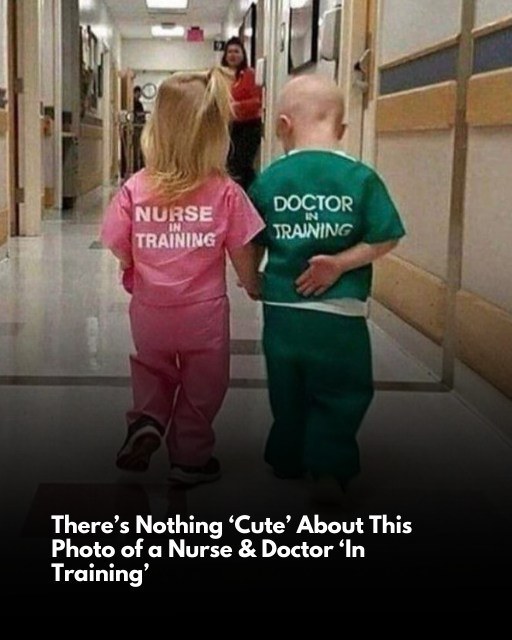
In today’s world, where conversations about societal norms are increasingly common, discussions about gender roles remain as relevant as ever. These dialogues, often sparked by seemingly ordinary events, shine a light on how far we’ve come—and how far we still have to go. A recent viral photo of a doctor and nurse in “training” has become a flashpoint for online commentary, igniting debates about stereotypes and equality in the medical field.
The Evolution of Gender Roles
The concept of gender roles is constantly evolving. Over the years, society has made significant progress in breaking down barriers that once dictated what men and women could or couldn’t do. Yet, just a few decades ago, these roles were far more rigid. There were certain jobs that were deemed inappropriate for women, and conversely, men would avoid certain tasks out of fear of ridicule or societal backlash.
Today, while we are far from perfect, the conversation around equality and opportunity is more prevalent than ever. This shift is a testament to how society is striving to create a more level playing field, where individuals are judged on their abilities rather than outdated stereotypes.
A Viral Photo Sparks Debate
Despite this progress, deeply ingrained assumptions still surface in unexpected ways. Take, for instance, the recent viral photo of a doctor and nurse in a “training” scenario. On the surface, the image seems harmless—a simple depiction of medical professionals. Yet, it quickly garnered a flood of online reactions, exposing the lingering stereotypes about gender in the medical field.
For many, the image was a reminder of childhood assumptions about doctors and nurses. Be honest—when you were a child, did you imagine all doctors as men and all nurses as women? It’s a common misconception rooted in societal norms from decades past. Growing up, it wasn’t unusual to picture a stern male doctor in a white coat or anticipate being greeted by a kind female nurse.
Historically, these roles were indeed sharply divided. Men dominated positions of authority in medicine, while women were relegated to caregiving roles like nursing. This dynamic wasn’t just a reflection of societal expectations; it was actively enforced by institutional practices and educational barriers.


